Choose the Right Tile for a Bathroom Remodel
In a San Diego bathroom, tile shapes the look and takes up more of the budget than any other piece. Choose the right material, size, and finish and the space feels fully remodeled, even if the fixtures are stock.
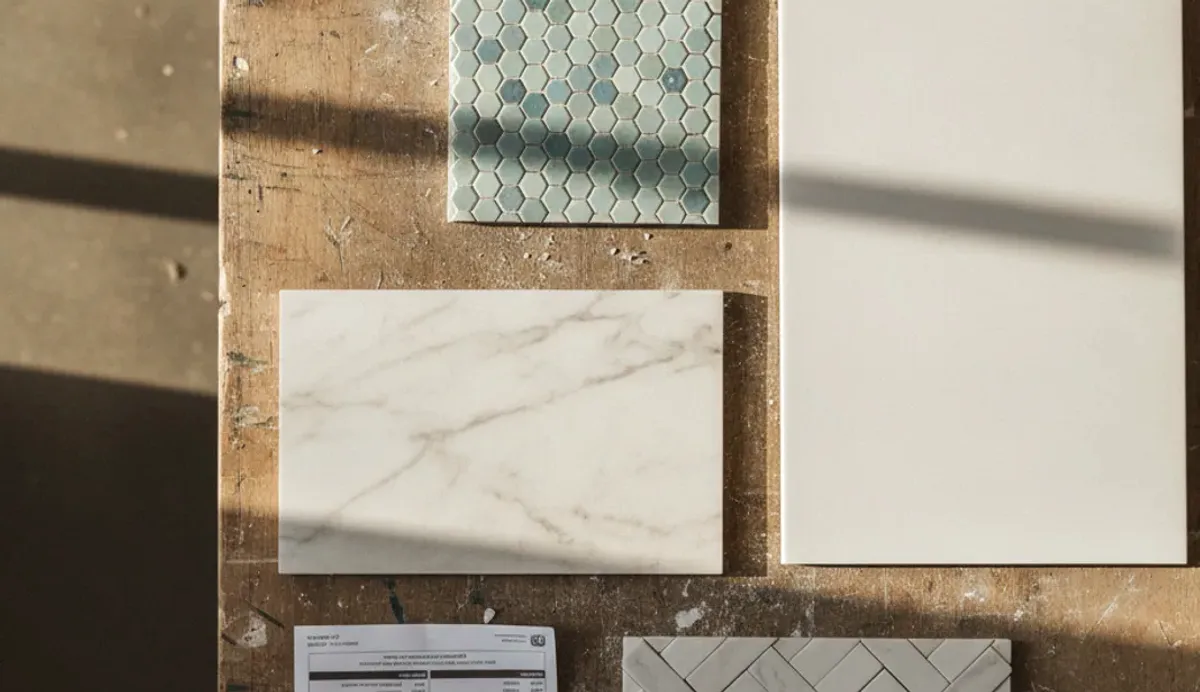
What you'll learn
- What actually separates porcelain from ceramic tile, and why that gap matters in a wet San Diego bathroom
- Reading a tile sample's PEI wear rating, DCOF slip rating, and porosity spec
- The reason large-format porcelain looks modern, and what its substrate requires
- When marble or travertine earns its upkeep, and when natural stone isn't worth it
Step by step
- Begin with how the tile will be used. Shower walls and shower floors call for different tile. A shower floor does best with small tile or a mosaic that carries a higher DCOF slip rating. A shower wall can handle large-format porcelain or a marble slab.
- Choose the material. Porcelain is dense, low in porosity, and rated for wet areas, which makes it the default for most San Diego remodels. Ceramic costs less and works fine on dry walls. Marble and travertine look beautiful but need sealing and gentle cleaning, particularly in homes with hard water.
- Choose the size. Large-format tile (12x24, 24x24, 24x48) looks modern and means fewer grout lines, though it needs a flat substrate and a tight layout. Small tile (mosaic, 4x4, hex) works better around slopes and curves and is a safe choice for a shower floor.
- Look at the ratings. Floors want PEI 4 or 5, wet areas want DCOF 0.42 or higher, and shower walls want a low porosity spec (under 0.5 percent). You'll find the spec sheet on the back of the sample or on the manufacturer's site.
- Buy 10 to 15 percent more than you need. Breakage, cuts, and future repairs use up a real share. A 60 square foot bath needs 66 to 70 square feet of tile for the floor, plus the shower walls and the curb or niche.
- Coordinate grout and layout. A 1/8 inch grout line with color-matched grout makes the surface read as one piece. Contrasting grout is a design decision, but it shows every stain and needs a penetrating sealer.
A glossy ceramic tile doesn't belong on a shower floor in San Diego. On a sample board it looks fine, but once water hits it, it becomes a slipping risk. For any tile that will have standing water on it, check for a DCOF slip rating of 0.42 or above, and request the spec sheet from the supplier before you sign.
Rather have a pro handle it?
Pro Bath SD connects you with separately licensed independent bathroom remodelers throughout San Diego County. Send a message and someone calls you back.
Keep learning.
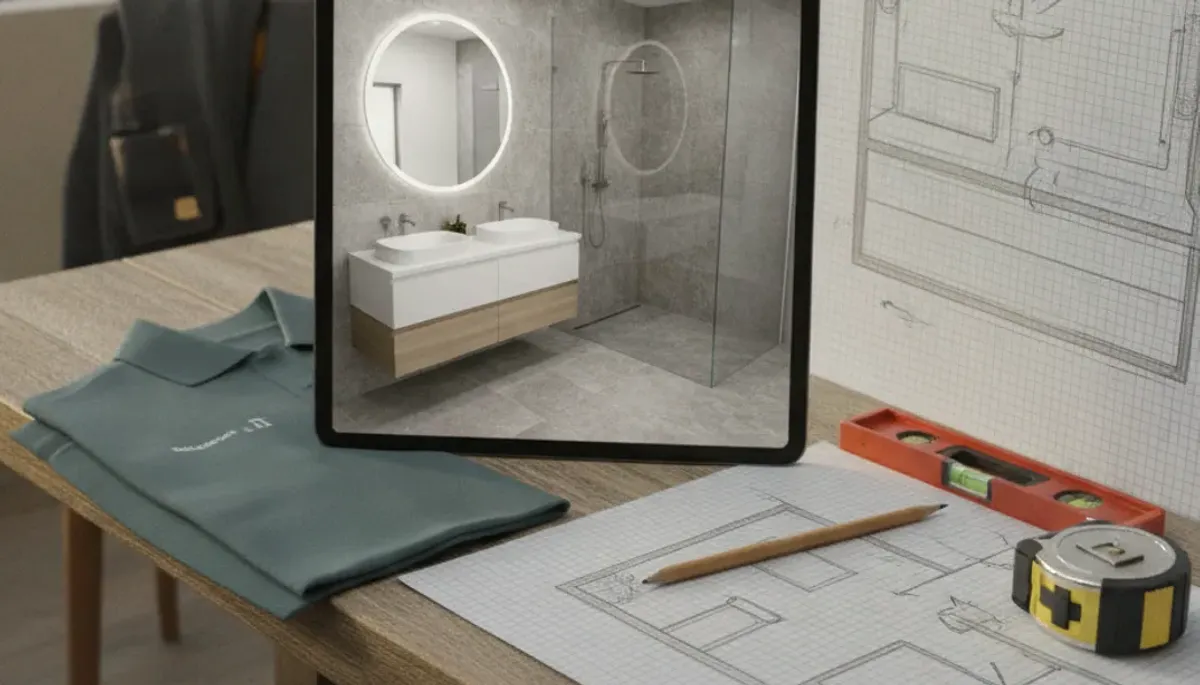
Plan a Bathroom Layout That Actually Works
When a San Diego bathroom remodel goes wrong, it's usually the layout that's to blame, not the tile or paint. Nail the clearances, fixture positions, and door swings on paper first, and everything after that moves quicker and costs you less.
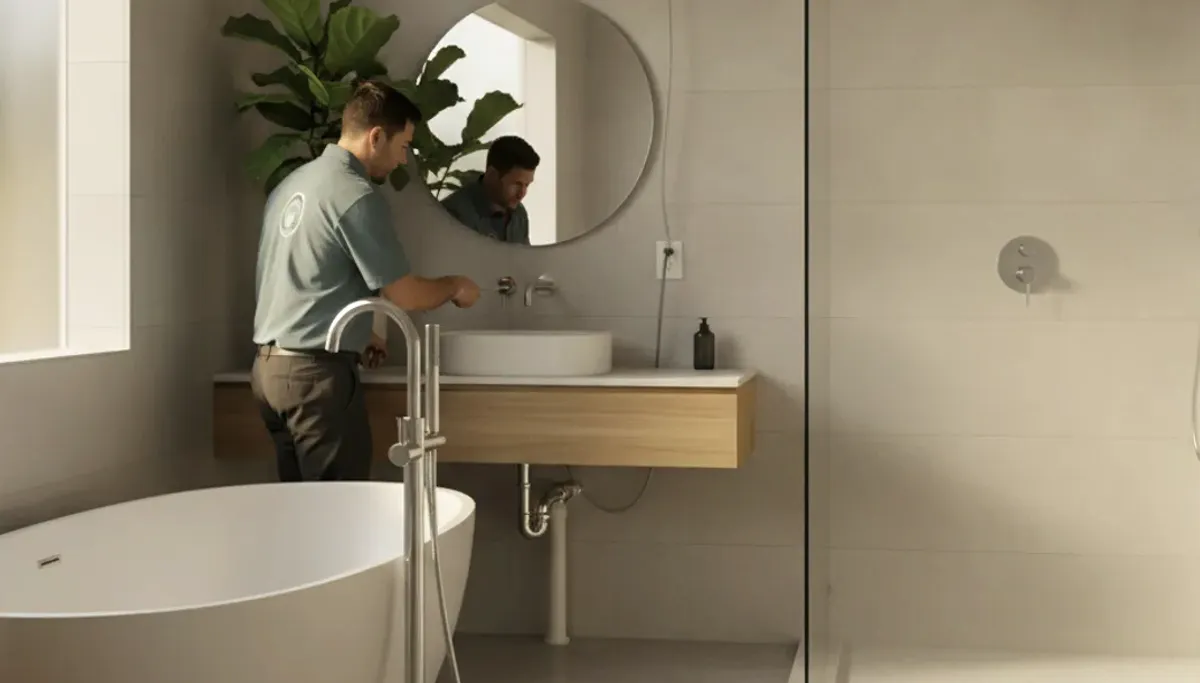
Decide Between a Shower, Tub, or Both
In San Diego, most homeowners hold onto at least one tub for resale purposes, even when it goes unused. What works best comes down to who lives in your home, what your lot allows, and how many years you expect to stay.
Set a Realistic Bathroom Remodel Budget
The scope call is what makes or breaks a San Diego bath remodel budget. A refresh, a mid-range full gut, and a primary suite expansion aren't the same project, and the numbers behind each one differ.